
Control
In litigation, a judge decides the outcome. In private mediation, the parties decide the outcome.
Mediation services
A neutral, confidential process for families, individuals and organisations in Nairobi and across Kenya, with online mediation available for parties elsewhere and abroad.
The process is adapted to the people, issues and relationships involved. An initial consultation helps confirm whether mediation is suitable.
Before mediation begins, most people only see the visible part of a conflict.
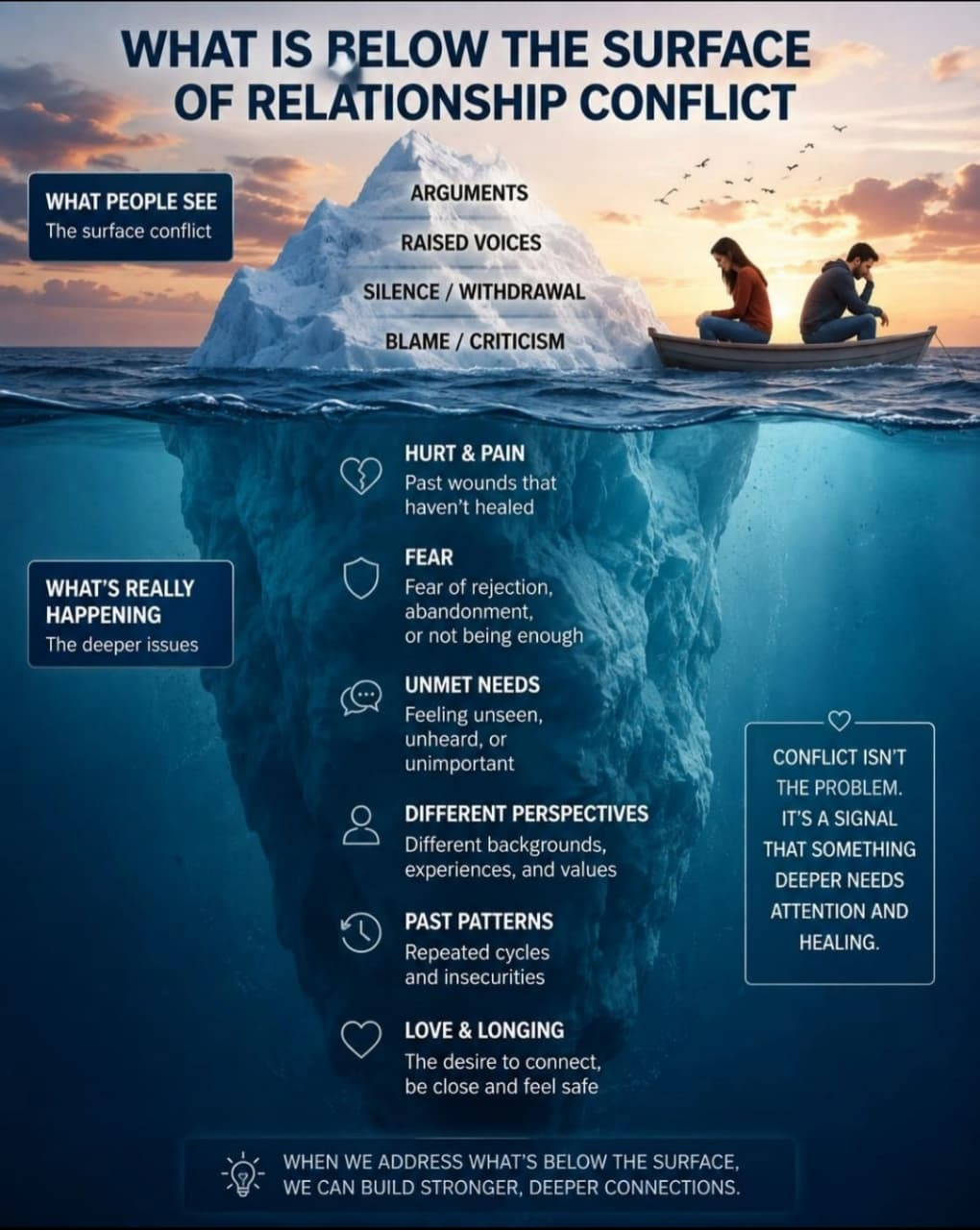
Arguments, raised voices, silence and blame are what people notice — and often what a court file records. They are rarely the whole story.
Underneath sit hurt that never healed, fear of losing something that matters, needs that were never heard, different backgrounds and values, patterns repeating from before, and, very often, a wish to keep a relationship intact.
Litigation decides the part above the water. Mediation makes room for the part below it, which is usually where a lasting agreement is found. Conflict itself is not the problem — it is a signal that something deeper needs attention.
Each matter is different, but the journey is clear and carefully managed.
Share a brief outline so I can check suitability, availability and any conflict of interest.
We agree the format, prepare for the conversation and work through interests and possible options.
When common ground is reached, the parties’ terms are captured clearly in a written settlement.
Parties can appoint a mediator directly before filing a case, or while seeking a constructive way forward outside the courtroom. We agree on participation, timing, confidentiality and fee sharing before the first session. Any settlement is recorded in writing and signed by the parties.
Matters screened and referred by a Kenyan court run under the Civil Procedure (Court-Annexed Mediation) Rules, 2022, with reporting back to the referring court within the prescribed timelines.
Sessions can be arranged in person in Nairobi or online for parties elsewhere in Kenya, Kenyans living abroad and international participants. The format, time zones and secure exchange of relevant documents are agreed before the session.
Fees depend on the nature and value of the dispute, the number of parties and the number of sessions required, and are normally shared equally between the parties. A written fee note is issued before the process begins. Talk to me for a quotation for your specific matter.
Request a quotationHonesty at the outset saves everyone time.
Private mediation
Private mediation is a confidential, party-driven process where disputing parties choose to resolve their conflict outside the courtroom, with the guidance of an independent, accredited mediator. Unlike court-annexed mediation, which is initiated through the court system, private mediation is engaged directly by the parties, on their own terms, timeline, and choice of mediator.
As dispute resolution in many jurisdictions continues to evolve, private mediation remains a relatively new and under-explained option compared to the more established court-annexed model. This page is written to give parties the information they need to make informed, confident decisions about how they manage and resolve their disputes.
Book a private mediation sessionPrivate mediation is an independent, out-of-court process in which parties voluntarily engage a professional mediator to help them reach a mutually acceptable resolution to their dispute. It operates separately from, but alongside, the formal court system, and can be used:
The parties choose their own mediator, set their own schedule, and control the pace and privacy of the process, rather than being bound by court calendars and public court procedure.
| Comparison | Private Mediation | Court-Annexed Mediation |
|---|---|---|
| Initiation | Parties engage a mediator directly, by mutual agreement | Referred by the court as part of a filed case |
| Mediator selection | Parties choose their own accredited mediator | Assigned from a court-approved panel |
| Timing | Can begin at any time, even before a dispute reaches court | Begins after a case is filed and referred |
| Scheduling | Flexible, arranged around the parties' availability | Follows court timelines and case management directions |
| Confidentiality | Fully private; discussions are not part of any public record | Governed by court rules on confidentiality |
| Cost structure | Agreed directly with the mediator | Often structured by court/tribunal fee guidelines |
| Outcome | A settlement agreement, which can be registered in court | A settlement agreement, recorded through the court process |
Litigation is an adversarial process where a judge or magistrate hears evidence and arguments from both sides and makes a binding decision. Private mediation is a collaborative process where the parties themselves negotiate and design their own resolution, with the mediator facilitating (not deciding).
In litigation, a judge decides the outcome. In private mediation, the parties decide the outcome.
Litigation follows strict rules of procedure and evidence. Private mediation is informal and flexible.
Litigation is often adversarial and can strain relationships. Mediation is collaborative and aims to preserve relationships, especially important in family, employment, and commercial disputes.
Litigation can take months or years to conclude. Private mediation can often be concluded in days or weeks.
Court proceedings can become part of the public record. Private mediation is confidential.
A court judgment is automatically enforceable. A private mediation agreement becomes enforceable once it is registered with the court, giving it the same status as a court order or decree.
A common misconception is that a privately mediated agreement carries less legal weight than a court judgment. In practice, once the parties reach a settlement through private mediation:
This means parties get the flexibility and privacy of a private process, together with the legal certainty of a court-backed outcome.
An impartial, accredited mediator with no stake in the outcome.
Discussions stay private, protecting reputations and relationships.
Disputes are often resolved far faster than through litigation.
Reduced legal costs compared to prolonged court proceedings.
Parties retain control over the outcome, rather than having a decision imposed on them.
Especially valuable in family, employment, commercial, and community disputes where an ongoing relationship matters.
Agreements can be registered in court, giving them full legal effect.
Parties jointly or individually approach the mediator and agree to mediate.
The mediator explains the process, confidentiality, and ground rules.
The mediator facilitates discussion, helping each party articulate interests and explore options, meeting separately with each side as needed.
Parties work through options toward a resolution that addresses their real interests, not just their stated positions.
Once agreement is reached, it is documented and signed by all parties.
The signed agreement is filed with the court for registration, making it enforceable as a court order.
The mediation process itself is voluntary, but once parties reach an agreement and it is registered in court, that agreement becomes legally binding and enforceable, just like a court judgment.
Yes. Parties can pursue private mediation alongside an ongoing court case, and the resulting agreement can be presented to the court to conclude the matter.
Yes. Discussions during private mediation are confidential and are not part of the public court record.
Parties may choose to have legal counsel present or to consult a lawyer during the process, but mediation itself is designed to be accessible without requiring litigation-style legal representation.
In mediation, the mediator helps parties reach their own agreement and has no power to impose a decision. In arbitration, the arbitrator hears the case and issues a binding decision, similar to a judge.
Mentorship program
A structured mentorship program for newly trained mediators, run in line with the accreditation committee's expectations — so your first real matters are supported, not solitary.
Training gives you the model; mentorship helps you use it with real parties, real emotions and real stakes.
Sit in on live matters, co-mediate where appropriate, and be observed with structured, confidential feedback.
Regular debriefs turn each session into learning — what worked, what to adjust, and how to keep growing.
Prepare your portfolio, understand the accreditation committee's requirements, and document your supervised hours.
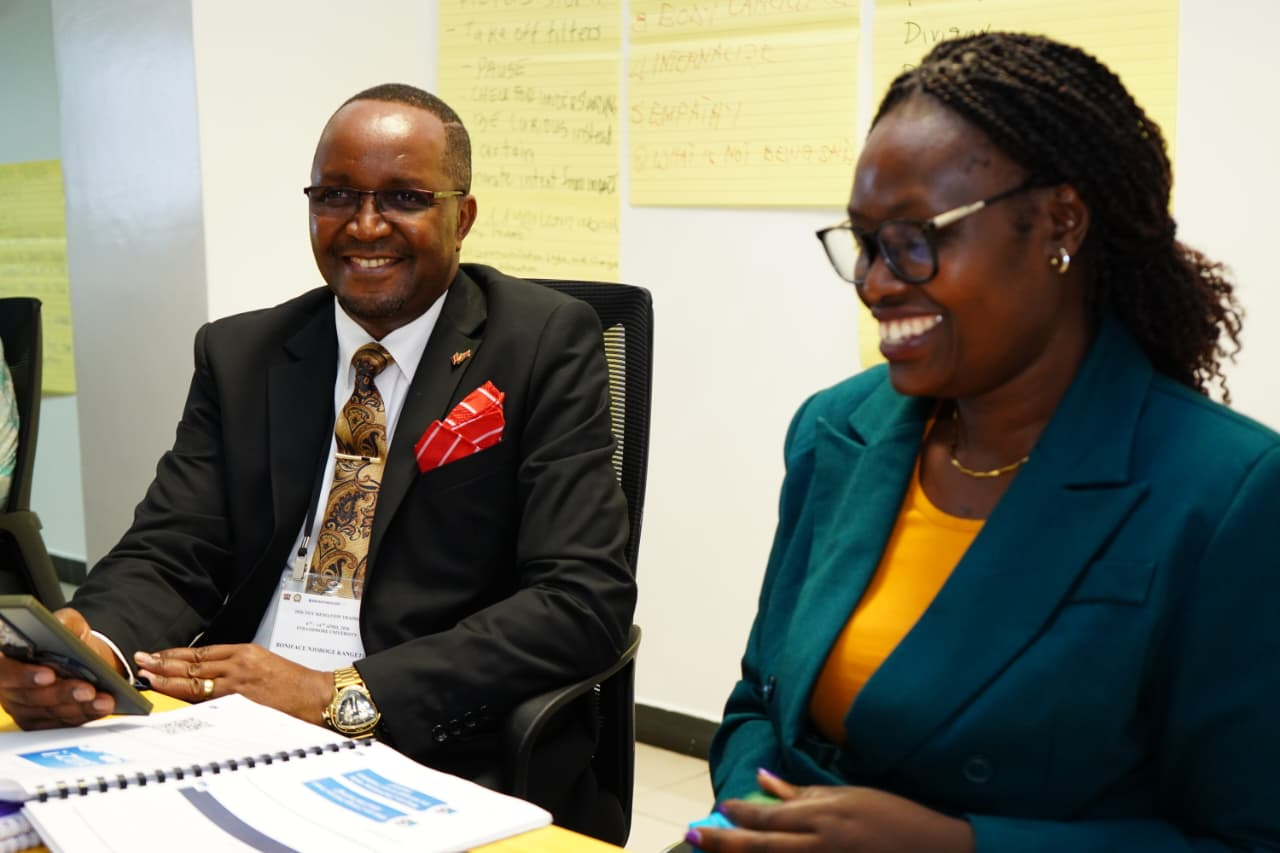
Boniface Njoroge K. is an internationally certified professional trainer of trainers in mediation and a certified mentor in mediation. He mentors within the standards set by the accreditation committee for newly trained mediators.
Places are limited so each mentee gets real attention. Share your details and training background — I'll respond personally.
Review all professional fees, payment terms and an estimate before requesting a session.
View fees and pricing guideRequest a session
Your request is not a confirmed appointment. I will contact you to confirm the date, assess suitability and agree the fee with all relevant parties.
Select your preferred method in the form. Secure payment instructions are shared directly after the scope and fee are agreed. Please do not send money before receiving a written fee note.